
Is Robot Massage Safe? What the Research, Safety Standards and Contraindications Say

Updated: 5 days ago
Robotic massage beds and robotic thermotherapy arms are showing up in gyms, spas and recovery studios, and the first question most people ask is a simple one: is robot massage safe? It is a fair question. A robot is pressing on your body, sometimes with heat, and you cannot read its face the way you can read a therapist's.
This guide gives a balanced answer. It looks at what published studies have actually recorded about adverse events, how modern systems are designed to limit force and temperature, which safety standards apply (and where they fall short), and who should check with a healthcare professional before booking. It also covers what spa, gym and clinic operators should put in place before offering a robotic service.
The short answer
On current evidence, robot massage looks low-risk for healthy adults when the device is well designed, properly set up and supervised, and when the person receiving it has been screened for conditions that make massage or heat unsuitable. The studies published so far have recorded very few problems. The catch is that those studies are small, often involve healthy volunteers, and do not all report safety in a systematic way. So "safe so far, in the conditions tested" is more accurate than "proven safe for everyone".
It also helps to remember that conventional massage is not risk-free either. The US National Center for Complementary and Integrative Health (NCCIH) says the risk of harmful effects from massage therapy appears to be low, but notes rare reports of serious side effects such as a blood clot, nerve injury or bone fracture, some involving vigorous techniques like deep tissue massage or people at higher risk of injury, such as elderly people (NCCIH). A robot does not remove those underlying risks. It changes who, or what, is applying the pressure.
What the research says about robot massage safety
Adverse events in published trials
The clearest data comes from a handful of controlled and pilot studies:
A randomized crossover trial with 21 participants compared robotic massage of the back with manual massage by a physical therapist. The authors report that there were no adverse events and no participants withdrew, and that the robotic sessions were not associated with adverse effects on any measured outcome. Participants could adjust the robot's pressure with a remote control, and an operator calibrated and started each routine and oversaw participant safety (PMC).
A pilot study of the EMMA massage robot with 20 healthy volunteers reported no adverse events. In one case the robot's probe moved off target because of scar tissue from a previous lumbar discectomy; the authors say the participant experienced no negative effects, only a momentary disruption to the massage (PMC). The paper also describes a safety mechanism that controls the maximum force applied.
That off-target moment is a useful reminder. Scar tissue, implants and unusual anatomy are exactly the situations where a body map and a planned path can meet reality, and where human supervision matters.
What a systematic review found
A systematic review of robotics in massage identified 17 eligible studies. Only one documented any discomfort: muscle pain in two healthy volunteers who received robotic massage on the jaw muscles at forces of 6 N and 10 N. No mechanical adverse events were observed, but the reviewers point out that safety considerations were not addressed in the remaining studies, and that only about 59% of the studies reported ethics approval or informed consent (PMC).
In plain terms, the absence of reported harm is encouraging, but much of the literature was not designed to look for harm. Larger trials with systematic adverse-event reporting are still needed.
Feeling safe is part of being safe
Perceived safety matters too. A 2026 study presented at the ACM/IEEE Human-Robot Interaction conference tested a robot that adjusted its pressure in response to spoken requests such as "little weaker". With 13 participants, the commands changed force in the intended direction and pain ratings were low, but perceived safety varied widely, which the authors suggest reflects a trade-off between adapting on the fly and keeping contact predictable (ACM Digital Library). For operators, the lesson is that clear explanations, predictable behaviour and an easy way to stop all build trust.
How robotic massage systems are designed to limit risk
Most commercial and research systems rely on several overlapping safeguards rather than a single feature.
Force sensing and force limits
Force sensors in the joints or applicator measure contact pressure continuously. The controller compares that reading with the programme's target and adjusts, and a hard ceiling stops pressure from exceeding a set maximum. This is the core difference between a robotic system and a fixed-track massage chair.
Body mapping and planned paths
Cameras or 3D imaging build a model of the treatment area so the arm can follow body contours instead of pushing along a generic track. Good systems also let the operator see the map and the planned route before starting.
Temperature monitoring for heat-based systems
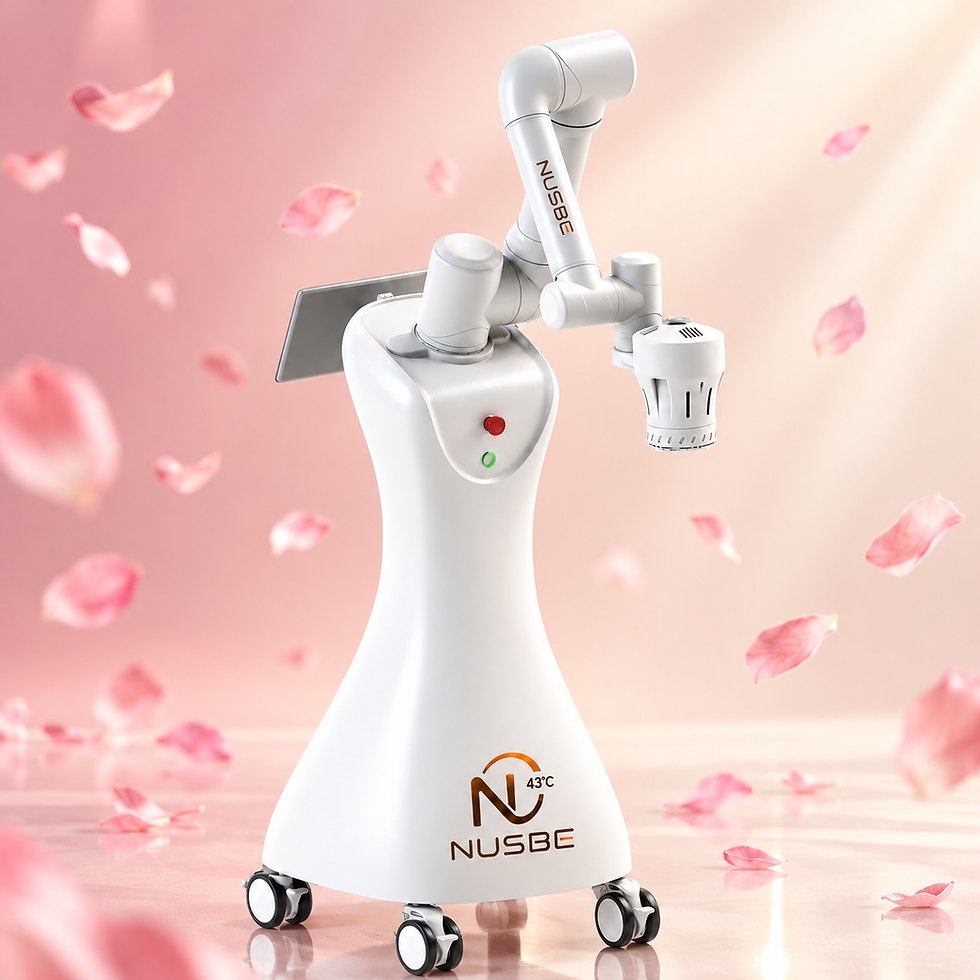
Where heat is involved, temperature becomes as important as pressure. NUSBE's M1, for example, uses infrared temperature monitoring of the skin surface and a controller that adjusts energy output against the treatment setting. Its technical overview describes a protective pause when sudden movement is detected and abnormal-temperature protection that switches off energy delivery, while noting that residual warmth can remain (NUSBE technology).
User control and stopping
Users should always have a way to change intensity or stop. Aescape's system, as rolled out at select Massage Envy franchised locations, lets users stay fully clothed and control pressure, music and target areas through a touchscreen (Massage Envy). Operator-guided systems such as NUSBE instead keep a trained operator responsible for setup, settings and comfort throughout the session (NUSBE FAQ).
Which safety standards apply to massage robots?
This is where things get less tidy. There is no single, widely adopted international standard written specifically for massage robots.
ISO/TS 15066 sets safety requirements for collaborative industrial robot systems, the kind designed to work near people. ISO states that it applies to industrial robots and not to non-industrial robots, although its safety principles can be useful in other areas of robotics. It is currently marked as due for revision (ISO).
ISO 13482:2014 covers safety requirements for personal care robots and explicitly includes human-robot physical contact applications. However, it excludes robots that are medical devices, and ISO notes that when it was published there was no exhaustive, internationally recognised data on pain or injury limits for impacts. ISO lists a replacement edition as under development (ISO).
Depending on how a device is described and what it is intended to do, medical-device rules may also apply in some markets. NUSBE's own compliance checklist, for instance, points operators to Malaysia's Medical Device Authority and to the EU Medical Device Regulation, and stresses that classification depends on the exact model, intended use and country (NUSBE compliance). If you are buying a system, ask for the declarations, registrations or test reports that apply in your market, and check the model, date and scope on each document.
Who should avoid robot massage, or check first?
The same precautions that apply to hands-on massage apply to robotic massage, because the risks come mainly from the person's health, not the delivery method. Mayo Clinic patient guidance lists conditions to discuss with a healthcare provider before massage, including blood-clotting disorders, blood-thinning medication, deep vein thrombosis, unhealed fractures, burns or open wounds in the area, cancer, uncontrolled high blood pressure, recent surgery, severe osteoporosis and high-risk pregnancy (Mayo Clinic).
Heat adds its own list. Hong Kong's Elderly Health Service advises that heat application is not suitable for people with fever, dermatitis, impaired circulation, impaired skin sensation, difficulty understanding instructions, or areas with acute inflammation, sprains, infection, open wounds or recent radiation therapy (Elderly Health Service). Reduced sensation is especially important: CommonSpirit Health warns that people with diabetes or chronic numbness should not use heat unless their doctor advises it, because lack of feeling can lead to a burn (CommonSpirit Health). Spine-health also describes contact burns from heat that is too hot or applied too long, along with drops in blood pressure and increased heart rate during heat treatment (Spine-health).
As a practical summary, speak to a healthcare professional first if any of these apply to you:
You are pregnant.
You have a heart condition, uncontrolled high blood pressure, or a history of blood clots.
You take blood thinners or have a bleeding or clotting disorder.
You have an injury, fracture, recent surgery, open wound or skin infection in the area.
You have reduced sensation to heat or pressure, for example from diabetes or nerve damage.
You have an implant, pacemaker or other device, or a suspected or active cancer in the area.
You have new, severe or unexplained pain.
How operators can run robotic sessions safely
For spas, gyms, hotels and clinics, safety is as much about process as hardware. A sensible operating checklist includes:
Screen every client. Use a written suitability questionnaire covering the conditions above, and repeat it when a returning client's health changes.
Train and supervise. Make sure staff know how to set up the system, read its feedback, and stop it immediately.
Start gently. Begin first sessions at lower intensity and shorter duration, then adjust based on feedback.
Keep communication open. Ask clients to report anything that feels too hot, sharp or uncomfortable, and act on it at once.
Maintain the equipment. Follow the manufacturer's maintenance schedule and keep records of servicing and faults.
Log incidents. Record any discomfort, skin reaction or unexpected movement, even if minor, and review the log regularly.
Keep claims honest. Describe sessions in comfort and recovery terms unless your device and market permit medical claims.
How NUSBE approaches safety
NUSBE is the AI robotic thermotherapy brand of Zeze Intelligence, with its flagship location at NUSBE Rimbayu in Selangor, Malaysia. Its approach is built around a trained operator throughout every session. The operator reviews suitability, selects settings and checks comfort, and NUSBE describes its sessions as a wellness service rather than a medical treatment (NUSBE FAQ).
NUSBE also publishes who its sessions may not suit, including people with a serious heart condition, uncontrolled high blood pressure, a bleeding or clotting disorder, fever or active infection, broken or injured skin, reduced sensation to heat, certain implants, recent surgery, a suspected or active cancer in the area, and pregnancy. It is equally upfront that a displayed temperature set point is an equipment setting, not a deep-tissue temperature or a measure of results. For the research behind heat and recovery, with its limitations spelled out, see the NUSBE heat research library. Businesses considering a robotic service can review supply documents on the NUSBE compliance page and the partner programme on NUSBE for Business.
Frequently asked questions
Can a massage robot press too hard?
Well-designed systems use force sensors and a maximum force limit to prevent this, and most let the user or operator reduce pressure or stop at any time. Pressure tolerance varies from person to person, so start gently and speak up if anything hurts.
Has anyone been injured by robotic massage?
The published studies reviewed here reported no serious adverse events. A systematic review found one study recording muscle pain in two volunteers, and no mechanical adverse events. However, many studies did not report safety systematically, so the evidence is still limited.
Is robotic heat therapy riskier than robotic massage?
Heat adds burn risk, particularly for people with reduced sensation, poor circulation or fragile skin. Systems that monitor skin temperature and cut energy output when limits are reached, combined with trained supervision, are designed to manage that risk.
Is robot massage safe during pregnancy?
Pregnant people should consult their healthcare provider before any massage, and many heat-based services, including NUSBE, state that they are not suitable during pregnancy.
Do massage robots have to meet safety standards?
There is no single global standard written specifically for massage robots. Related standards such as ISO/TS 15066 and ISO 13482 exist, and some devices may fall under medical-device rules depending on the market and intended use. Ask the supplier for the documents that apply where you operate.
The bottom line
Robot massage appears to be low-risk for healthy adults when the system senses and limits force and temperature, a trained person supervises, and clients are screened for conditions that make massage or heat unsuitable. The research so far is reassuring but small, and safety standards for this category are still catching up. Treat a robotic session the way you would a hands-on one: share your health history, start gently, and stop if anything feels wrong.
To see how one operator-supervised robotic thermotherapy system handles sensing and protection, explore the NUSBE technology page.
Preparing operators for a robotic wellness service
For a business evaluating a supervised service, review the M1 Thermal equipment details alongside the wider ZEZE robotics catalogue. A live robotics demonstration is an opportunity to discuss the model's controls, operating workflow and training needs.
ZEZE's AI Robotic Wellness Masterclass with Yen at NUSBE Rimbayu introduces supervised M1 operation and business planning. Register interest for confirmed course details; the pilot is separate from equipment-specific onboarding and does not replace the machine's operating instructions.
This article is for general information and is not medical advice. Always consult a qualified healthcare professional about pain, injury, pregnancy or medical conditions.


Comments